


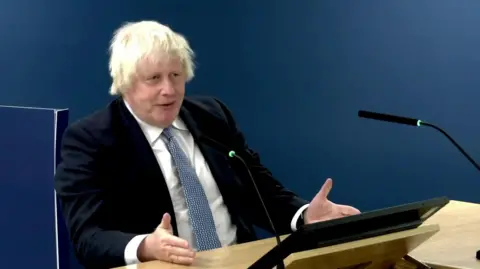
 Official Inquiry Session
Students endured a "huge toll" to protect others during the coronavirus crisis, Boris Johnson has told the inquiry reviewing the consequences on youth.
The former prime minister restated an regret expressed before for matters the authorities erred on, but said he was proud of what instructors and learning centers accomplished to manage with the "unbelievably tough" conditions.
He countered on prior suggestions that there had been insufficient strategy in place for closing educational facilities in early 2020, saying he had believed a "great deal of consideration and attention" was already applied to those choices.
But he noted he had additionally wished educational centers could continue operating, calling it a "terrible idea" and "private horror" to close down them.
Previous Evidence
The hearing was informed a approach was only created on the 17th of March 2020 - the date prior to an declaration that learning centers were closing.
The former leader told the proceedings on that day that he acknowledged the feedback around the lack of planning, but noted that making changes to learning environments would have necessitated a "much greater level of understanding about the pandemic and what was expected to transpire".
"The rapid pace at which the disease was advancing" made it harder to prepare regarding, he continued, saying the main emphasis was on trying to avoid an "appalling health emergency".
Disagreements and Exam Grades Fiasco
The inquiry has additionally been informed previously about numerous tensions involving government leaders, such as over the judgment to close learning centers once more in the following year.
On the hearing day, Johnson told the inquiry he had hoped to see "mass examination" in learning environments as a method of maintaining them open.
But that was "not going to be a feasible option" because of the recent coronavirus variant which emerged at the same time and sped up the dissemination of the virus, he said.
Included in the biggest challenges of the pandemic for the leaders came in the assessment scores fiasco of summer 2020.
The education department had been compelled to retract on its use of an algorithm to award grades, which was intended to avoid inflated grades but which conversely resulted in 40% of expected outcomes downgraded.
The public reaction led to a U-turn which signified students were finally awarded the marks they had been predicted by their educators, after national tests were cancelled earlier in the period.
Reflections and Prospective Crisis Preparation
Citing the assessments situation, inquiry counsel proposed to the former PM that "everything was a failure".
"If you mean the pandemic a catastrophe? Yes. Was the loss of schooling a disaster? Yes. Did the cancellation of tests a disaster? Yes. Was the letdown, resentment, dissatisfaction of a significant portion of children - the additional anger - a catastrophe? Absolutely," Johnson said.
"Nevertheless it should be seen in the context of us trying to manage with a significantly greater crisis," he noted, citing the absence of education and tests.
"On the whole", he stated the learning administration had done a rather "courageous job" of attempting to deal with the pandemic.
Subsequently in the day's evidence, the former prime minister said the lockdown and social distancing rules "probably were excessive", and that children could have been exempted from them.
While "ideally a similar situation not happens again", he commented in any future prospective pandemic the closure of schools "genuinely must be a measure of last resort".
The present stage of the coronavirus investigation, examining the impact of the outbreak on young people and adolescents, is due to end later this week.


